




Nigerian billionaire Abdul Samad Rabiu is turning heads again, this time for rewarding loyalty in spectacular fashion.Abdul Samad Rabiu distributed $20.7 million among 1,768 long-serving employees of BUA Group.The rewards were announced during the BUA Night of Excellence on December 13, 2025.This initiative followed a 50% salary increase earlier in the year amid economic pressures.Rabiu’s net worth increased notably in 2025, positioning him as Africa’s fourth-richest individual.
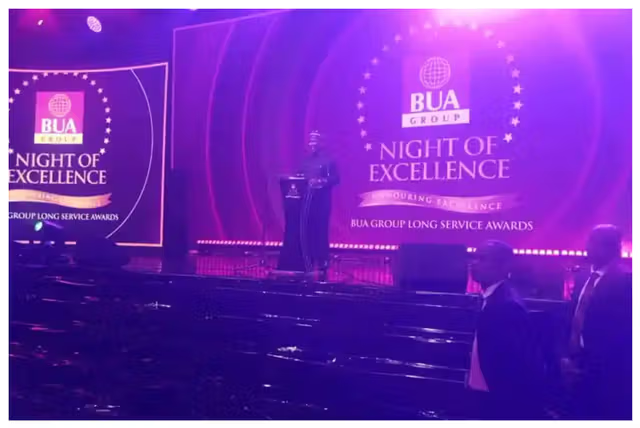
The founder and chairman of BUA Group has handed out $20.7 million in cash to long-serving employees, underlining his commitment to the people powering one of Africa’s largest industrial conglomerates.From senior executives to frontline staff, nearly 1,800 employees shared in the windfall, a move that reinforces Rabiu’s reputation as a billionaire who invests not just in factories and infrastructure, but in the livelihoods of those who make his business thrive.
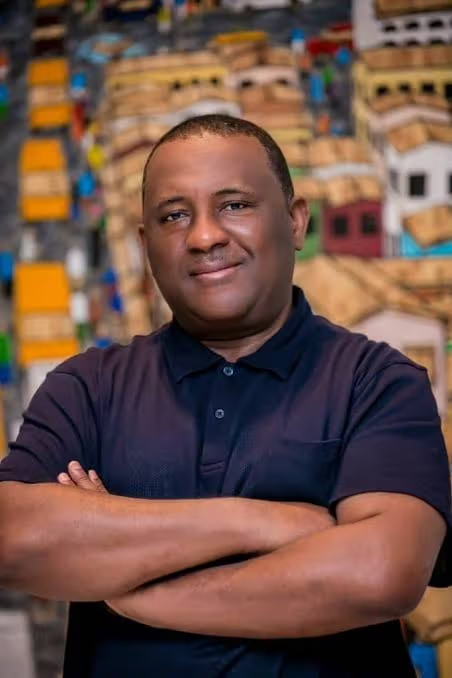
Wealth Surge Underscores a Standout Year for RabiuThis generous move comes on the back of a remarkable year for Rabiu personally. At the start of 2025, his net worth was estimated at approximately $5.1 billion, placing him sixth on the African billionaire list, behind Mike Adenuga and Naguib Sawiris.By December 14, 2025, Forbes’ real-time billionaire tracker valued his wealth at $8.5 billion, a gain of $3.4 billion in just one year.The surge allowed Rabiu to surpass both Adenuga and Sawiris, securing the fourth position in Africa and ranking 390th globally

Prioritizing Employee WelfareEarlier this year, Rabiu further demonstrated his commitment to staff by approving a 50 percent salary increase across the group.The raise, which applied to both permanent and non-permanent employees, came amid rising inflation and economic pressures in Nigeria.By addressing these challenges proactively, BUA Group reinforced its reputation as a company that values the well-being of its workforce.Rabiu Adds a Global 8000 Jet to His Expanding Empire.

Meanwhile, Rabiu has also made headlines on the personal front. Notably, he recently gifted himself a Bombardier Global 8000 private jet, becoming the first African owner of the ultra-long-range business jet.The aircraft, priced between $78 million and $82 million, and potentially reaching $85–95 million with bespoke interiors, signals the continued expansion of his personal and corporate footprint while maintaining a high-profile lifestyle.This dual focus on rewarding employees and elevating his private ventures highlights the billionaire’s approach to balancing business growth with personal brand and status.
Growth and Strategic Investments
At the same time, BUA Group’s business expansion shows no signs of slowing. BUA Cement now boasts a combined production capacity of 17 million tonnes per year and reported revenues of $5.9 billion (₦858.7 billion) for the first nine months of 2025.Meanwhile, BUA Foods, which includes BUA Sugar Refinery, BUA Oil Mills, IRS Flour, IRS Pasta, and BUA Rice, surpassed $989 million (₦1.42 trillion) in revenue over the same period, driven by strategic investments and improved operational efficiency.Global Context: Employee Rewards on the RiseRabiu’s approach aligns with trends among global corporations. Earlier this month, JPMorgan Chase announced that it would provide awards of up to $1,000 to employees earning less than $80,000 worldwide, provided they had at least one year of service.Payments are scheduled for early 2026, according to CEO Jamie Dimon. Unlike corporate-mandated policies abroad, however, Rabiu’s initiatives are personally driven, highlighting a hands-on approach to rewarding loyalty and ensuring financial stability for his staff.
Philanthropy and Employee Loyalty
Through these consistent efforts, Abdul Samad Rabiu, Africa’s fouth-richest individual and Nigeria’s 2nd wealthiest, continues to make waves.By combining business growth with employee-focused philanthropy, he has positioned BUA Group as one of Africa’s most employee-conscious conglomerates.Ultimately, these actions underscore the value of loyalty and performance as key drivers of corporate success, setting a high benchmark for African business leaders seeking to balance profit, growth, and workforce welfare.
