



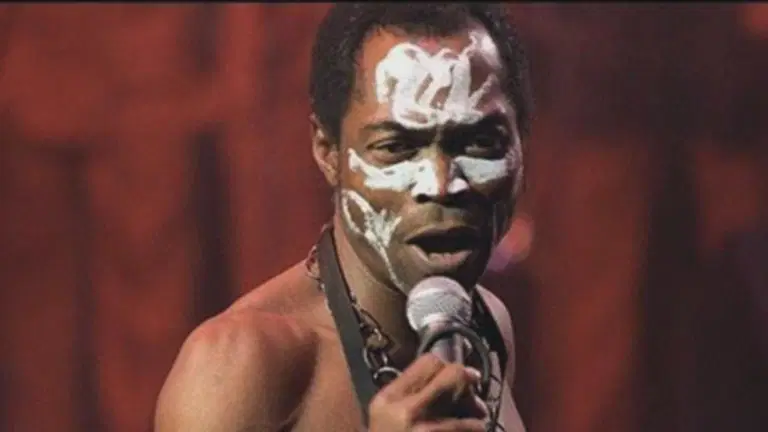
The post-humous conferment of the Grammy Lifetime Achievement Award on Fela Anikulapo Kuti, nearly three decades after his death, is a long-overdue acknowledgement of a life spent insisting that art must tell the truth, even when truth is dangerous.That Fela became the first African to receive this honour underscores both the scale of his influence and the historic blind spots of global cultural institutions. Fela did not merely make music; he engineered a sound. Afrobeat, his singular fusion of high-life and Yoruba rhythms with American jazz, funk and soul, was not created for escapism. It was designed as a weapon.
At a time when many artists sought neutrality or refuge in metaphor, Fela chose confrontation. His music named names, indicted systems, and challenged power with a clarity that made him a constant target at home and a legend abroad. That courage was inseparable from his artistry.
Fela’s revolutionary politics repeatedly brought him into violent conflict with Nigeria’s military regimes. His Kalakuta Republic was razed by soldiers. His mother, Funmilayo Ransome-Kuti, one of Africa’s foremost women’s rights activists, suffered fatal injuries during a military assault linked to his dissent.Fela paid for his convictions with incarceration, brutality and bodily harm. Honouring him has inevitably forced both the music industry and the political class to reckon with the cost of principled art.
The Grammy recognition matters because Fela’s impact has only expanded with time. Afrobeat is no longer a niche genre; it is a global musical grammar.His influence spans continents and generations, shaping artists such as Beyoncé, Paul McCartney and Thom Yorke, while laying the foundation for contemporary Nigerian Afrobeat. In an era when protest music often struggles to cut through the noise, Fela’s catalogue remains a master class in making resistance irresistible.Yet this moment should also invite honest conversation. Fela was a complex and at times deeply troubling figure.His views on gender and aspects of his personal life have drawn justified criticism. Celebrating his artistic and political courage must not launder these contradictions. Rather, they should be held in tension, acknowledging that greatness can coexist with serious failure, and that reckoning deepens, rather than diminishes, legacy.Ultimately, the Grammy nod is less about canonisation than recognition: recognition that African innovation has long shaped global music; that political art belongs at the centre, not the margins; and that influence cannot be measured solely by chart positions or commercial success.
This award is a reminder that some artists do not merely soundtrack their times, they argue with them.
