







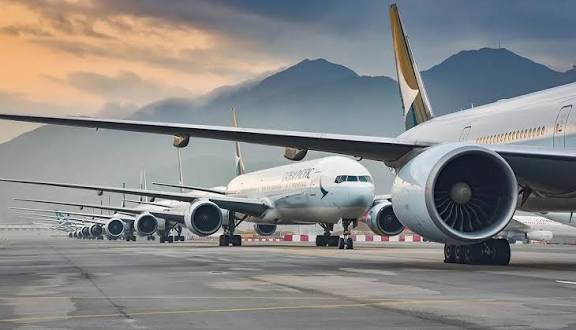
Nigeria’s aviation industry has long been criticized as inefficient and politically driven.
“The Bane of State-Owned Airlines” argue that state-backed carriers are vanity projects draining scarce resources. Yet this view misses a deeper truth: what appears to be waste today may in fact be the foundation for tomorrow’s aviation renaissance. State-owned airlines are often dismissed as political experiments. Critics highlight the capital intensity of aviation, where continuous investment in aircraft, maintenance, and certification is required. With few exceptions, such as Akwa Ibom’s Ibom Air, most state airlines are seen as unsustainable.


But this pessimism overlooks the capacity gaps and underutilized potential in Nigeria’s aviation ecosystem.Nigeria recorded about 16–17 million passengers in 2024, including both domestic and international travellers. Lagos, the busiest hub, handled around 7–8 million passengers, nearly half of the national total. Abuja followed with about 5–6 million, while other airports contributed the rest.Yet most Nigerian airlines operatetes with just four to six active aircraft, limiting connectivity an growth. Nigeria has also called for accelerated implementation of the Single African Air Transport Market (SAATM), recognizing its role in lowering fares and boosting intra-African trade.

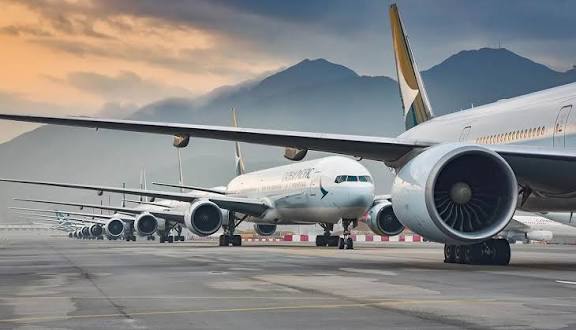
The real advantage of state-owned airlines lies in the deep pockets of government. States can provide seed funding to acquire aircraft and build infrastructure, something private investors often avoid. Once established, these ventures can expand into diverse financing options—leasing, bonds, and public-private partnerships—creating sustainable business structures. With states providing the initial capital, airlines can later transition into privatized entities, sparking a state-led private sector explosion in aviation. Ibom Air shows what is possible when vision meets investment. With over 1.3 million passengers in 2024, it ranked third among Nigerian carriers.
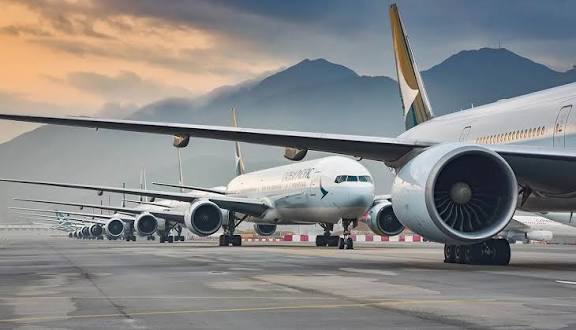
The state’s investment in infrastructure and training has created a sustainable model that other states can emulate. The lesson is clear: state ownership is not inherently flawed; poor planning is. Nigeria’s numbers pale compared to continental leaders. Ethiopian Airlines carried 19 million passengers in 2024/25 with a fleet of over 145 aircraft. South Africa projected 36 million passengers in 2024, more than double Nigeria’s traffic. This comparison underscores Nigeria’s headroom for growth. With strategic investment, Nigeria could close the gap and position itself as a continental hub. For state-owned airlines to succeed, they must be supported by coherent national policy.


Tax and charges reform is needed to reduce costs and stimulate demand. Ecosystem reconfiguration aligning airports, regulators, and airlines under a growth-oriented framework will create synergies that drive efficiency. Federal coordination is essential to prevent duplication and ensure investments contribute to national objectives. Nigeria’s aviation sector is central to Africa’s integration. The country has pledged accelerated implementation of SAATM, recognizing that open skies will enhance connectivity and competitiveness.


Aviation is also key to trade under the African Continental Free Trade Area (AfCFTA). Nigeria recently launched an AfCFTA air corridor linking Lagos to Kenya, Uganda, and South Africa, cutting export logistics costs by up to 75 percent. This positions Nigeria as a hub for continental trade. State-owned airlines may look like a bane today, but with strategic management, capital deployment, and eventual privatization, they can become the bedrock of Nigeria’s aviation renaissance. The challenge is not whether states should invest, but whether they can evolve these ventures into sustainable, growth-oriented carriers. Nigeria stands at a crossroads. If the federal government aligns policy with state ambition, and if states commit to building airlines with vision rather than vanity, the country can transform aviation from a drain into a driver of growth, integration, and prosperity. What critics see as waste may, in time, prove to be the spark that ignites Nigeria’s rise as Africa’s aviation powerhouse.
By Dr. Alexander Nwuba, FITPN, FIMCN, FIPMAN


