



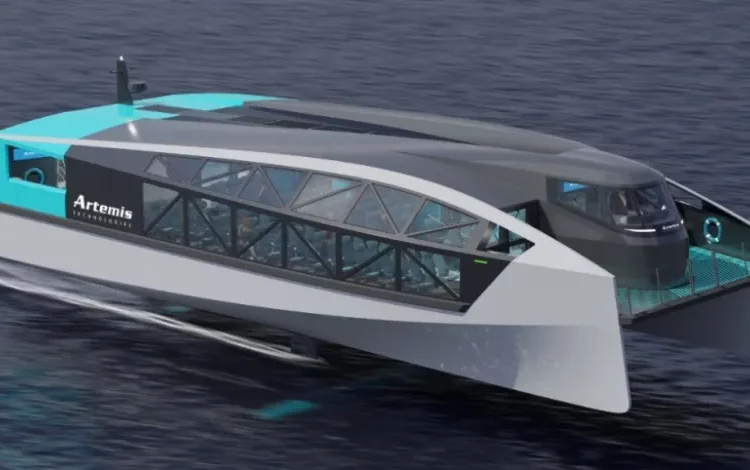
The Federal Government has approved N14.6billion for the procurement of modern boats and ferries to replace unsafe wooden boats and improve safety, trade and passenger transportation on Nigeria’s inland waterways.Former Managing Director of the National Inland Waterways Authority (NIWA), Mr Bola Oyebamiji, disclosed this in Osun State during a courtesy visit by the Coalition of Maritime Journalists, who also presented him with a letter nominating him as the ‘Most Friendly Maritime Chief Executive Officer’.
Oyebamiji said the newly approved boats and ferries would be deployed across major riverine states, including Niger, Benue, Kogi, Kwara and Kebbi, where waterways remain critical for community movement and commercial activities.“I presented a paper to the Federal Government through the Minister of Marine and Blue Economy, Dr Adegboyega Oyetola, and about N14.6 billion was approved for the procurement of standard boats and ferries capable of safely carrying agricultural products and passengers on our inland waters,” he said.He noted that inland water transportation in many hinterland states has long been hampered by obsolete wooden boats and unsafe operating practices, often resulting in avoidable accidents.
Oyebamiji said the newly approved boats and ferries would be deployed across major riverine states, including Niger, Benue, Kogi, Kwara and Kebbi, where waterways remain critical for community movement and commercial activities.“I presented a paper to the Federal Government through the Minister of Marine and Blue Economy, Dr Adegboyega Oyetola, and about N14.6 billion was approved for the procurement of standard boats and ferries capable of safely carrying agricultural products and passengers on our inland waters,” he said.He noted that inland water transportation in many hinterland states has long been hampered by obsolete wooden boats and unsafe operating practices, often resulting in avoidable accidents.
According to him, the procurement would significantly reduce reliance on unsafe craft and enhance food supply chains, allowing farm produce to move faster and cheaper from rural communities to urban markets.
Oyebamiji revealed that while wooden boats contribute about 20 to 25 per cent of challenges on inland waterways, human error accounts for nearly 70 per cent of accidents.“There was a time when I organised training and discovered that some operators were under the influence of alcohol and drugs. Safety is not only about vessels; it is also about behaviour.With better boats, supervision and sensitisation, we can change that culture,” he stated.Reflecting on reforms under his leadership, Oyebamiji said NIWA moved away from being known mainly for boat mishaps to prioritising staff welfare, motivation and stakeholder engagement.
