






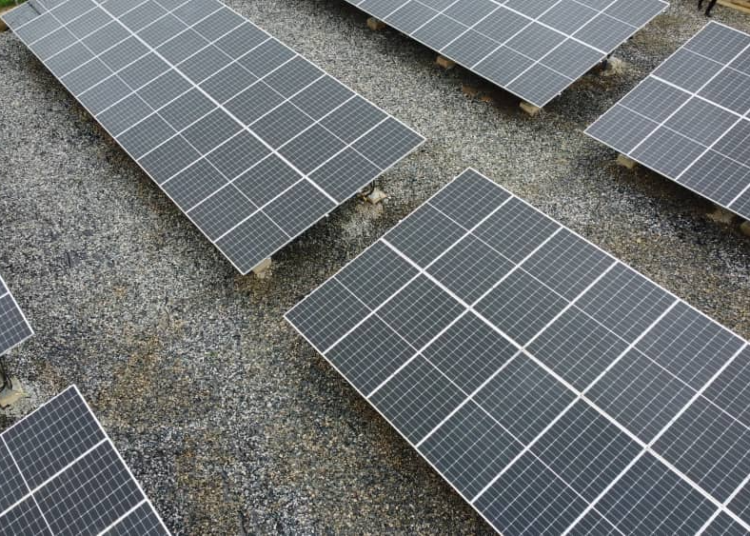
Decentralised solar has been identified as critical to deliver uninterrupted electricity supply to rural communities in Africa where millions live without power supply.Report indicates that globally more than 666 million people still lack access to electricity and Africa accounts for more than 80 per cent of that total, with most affected populations living in remote and rural areas.
In sub-Saharan Africa, rural electricity access reached only 31.6 per cent in 2023, compared with 82.2 per cent in urban areas, according to World Bank data.This persistent gap continues to limit economic development, access to basic services, and industrial activity in rural regions.Against this backdrop, decentralised energy solutions increasingly occupy a central position in Africa’s electrification pathways.
The International Energy Agency (IEA) highlighted this trend in its October report “Financing Electricity Access in Africa.” The Agency estimated that decentralised systems could account for around 55 per cent of new electricity connections on the continent by 2035.
Governments, development banks, and private investors increasingly view these solutions as essential complements to national grid expansion.
Recent data confirms that deployment has already accelerated. The International Renewable Energy Agency (IREA) reported that global decentralised renewable energy capacity rose from 6 gigawatts in 2015 to 11.1 gigawatts in 2024.
These systems currently supply electricity to about 86 million people worldwide.
More than three-quarters of these beneficiaries live in Africa, underscoring the continent’s central role in decentralized energy growth.
Solar energy plays a dominant role within this expansion. Decentralized solar capacity increased from 1.02 gigawatts in 2015 to 4.05 gigawatts in 2024. By comparison, decentralized bioenergy capacity rose more modestly, from 4.2 gigawatts to 5.1 gigawatts over the same period.
Solar accounts for most of the growth in decentralized capacity due to its modular design, fast deployment, and strong suitability for remote rural areas.Over the medium and long term, Africa’s vast solar potential and the geographic constraints of underserved regions will position decentralised solar as a durable solution. Policymakers increasingly integrate these systems into national electrification strategies as a cost-effective and scalable option for expanding electricity access across the continent.