







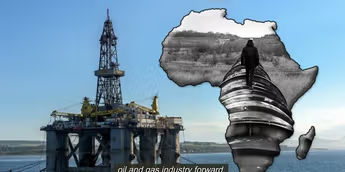
Africa’s oil and gas sector is poised for a fresh wave of investment following the launch of the African Energy Bank, which will mobilise an initial $10 billion to finance priority energy projects across the continent, beginning with Nigeria, Angola, and Libya.
The African Energy Bank was launched, aiming to secure an initial $10 billion to support energy projects in Africa, starting with Nigeria, Angola, and Libya.The funding will target comprehensive energy development—upstream, midstream, downstream—with a focus on energy security and project revitalization.The initiative was announced during the 9th Nigeria International Energy Summit 2026 by the African Petroleum Producers’ Organisation Secretary General.Hosting the initiative in Nigeria underscores its significance as Africa’s primary oil producer and highlights local and continental benefits.
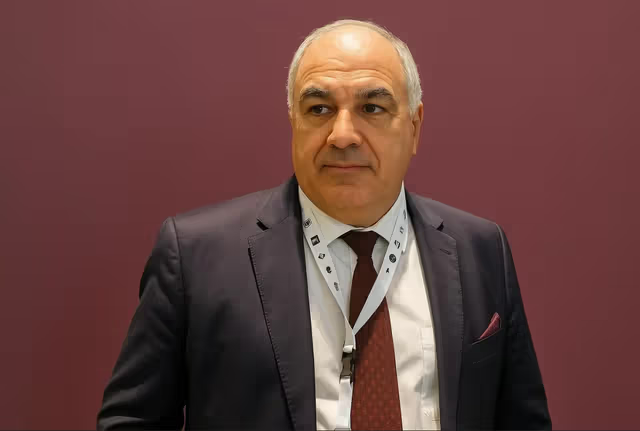
The announcement was made by Farid Ghezali, Secretary General of the African Petroleum Producers’ Organisation (APPO), during the opening of the 9th Nigeria International Energy Summit 2026 in Abuja.The summit brought together government officials, regional petroleum bodies, and private investors to advance conversations around energy-led industrialisation and long-term economic resilience.Ghezali said the first phase of the initiative will focus on upstream, midstream, and downstream developments, with the aim of unlocking stalled projects and improving regional energy security.
He noted that the new funding platform is designed to attract global capital while offering structured financing aligned with environmental, social, and governance standards.“Allow me to present to you our phased growth. Phase 1 is the African Energy Bank platform with a $10 billion project involving Nigeria, Angola, and Libya, supported by APPO certification and major international oil companies such as Shell and Eni,” Ghezali said.

Why Nigeria hosting the African Energy Bank mattersNigeria’s role as host of the African Energy Bank places Africa’s largest oil producer at the centre of a new continental financing architecture.For Nigeria, hosting the institution is expected to strengthen investor confidence, improve access to long-term capital, and accelerate the development of gas, refining, and petrochemical projects critical to industrial growth.For the wider continent, it signals a shift toward African-led solutions to chronic underinvestment in energy infrastructure.Ghezali said Africa continues to lose significant value by exporting raw hydrocarbons, noting that about 70 percent of crude oil and 45 percent of natural gas are shipped abroad, costing the continent an estimated $15 billion annually in forgone local value.He added that financing constraints remain severe, with borrowing costs in Africa ranging from 15 to 20 percent, compared with 4 to 6 percent in Asia.Looking ahead, Ghezali outlined a three-phase expansion plan for the bank. Phase 2, scheduled for 2027, will introduce a regional gas trading hub aligned with the Congo Brazzaville Declaration and promote 50 percent local content.
By 2030, Phase 3 aims to grow the bank into a $212 billion financial platform supporting gas transition and broader energy transformation.“Energy is, without a doubt, the engine of peace and prosperity,” Ghezali said, stressing that Africa’s challenge is converting resource wealth into shared economic value.


