



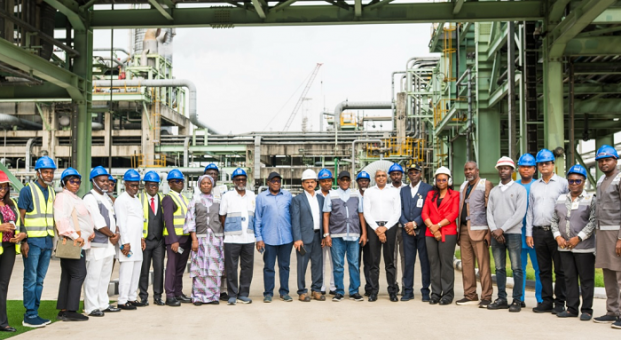
Nigeria Midstream and Downstream Petroleum Regulatory Authority (NMDPRA) has disclosed that efforts are underway for the country to begin the export of Uriah in 2028.The Chief Executive of the NMDPRA, Engr. Saidu Mohammed, who spoke after touring facilities at the Indorama Eleme Fertilizer and Chemicals Limited in Eleme Local Government Area of Rivers State, also said Nigeria would soon begin large scale export of fertilizers. Mohamed and his team visited the Indorama establishment as part of their three-day tour of selected midstream and downstream facilities in the oil-rich state of Rivers.
Mohammed, who said the country was working towards becoming a major hub for value added products in the oil and gas industry, described the midstream as an important sector that required huge investment to reap the dividends. He said the country had no business importing value-addition products like Uriah and fertilisers, especially with the investment being made by some private concerns in-country to boost her oil and gas, as well as related sectors.
Mohammed said: “The midstream of the oil and gas business is really a tremendous segment that requires a lot of investment. We need $30 to $50 billion today if we must get what we need to get Nigeria on the right footing as being the hub of not only for the oil and gas, but whatever secondary recovery we can have.
Value addition products like the fertilizers, Uriah, and what have you; we have no business importing any of those things and behold, with the expansion of what is going on today at Indorama and many other places including Dangote fertilisers, I am sure that in the next 24 months Nigeria will join the league of Uriah exporting countries and that is where we should be.“And not only being a hub for energy but also being a hub of secondary derivatives of oil and gas.”Landing Indorama’s investments, the NMDPRA boss said: “It is really a manifestation of what Nigeria needs to have. We need a lot of these in the midstream. Definitely fertilisers plants and any value addition that we have on the Hydrocarbon sources is what is needed for this nation to propel.”
Mohammed said he chose to visit Rivers first because of the state’s strategic importance in Nigeria’s oil and gas industry as it housed critical national assets such as refineries, manufacturing facilities, processing plants, among others
He said: “You know the midstream and downstream segment of Nigeria and Rivers State has a lot of them. There is no sample that we cannot take, if we want to see anything on the gas process, we will. If we want to see anything about the manufacturer, we shall. If we want to see any on the refinery, we can.“So we have selected just a few for us to be able to have an overview of what is going on and that is the main mission.
The authority is there to facilitate, for us to continue giving them the support that they need, to create the environment for them to continue to add on the investment while we are attracting more and more investments to grow. That is the whole essence.”In his remarks, the Chief Executive Officer of Indorama Eleme Fertilizer and Chemicals Limited, Munish Jindal, said the visit was important for the regulator to better appreciate what was on the ground, including the operations, successes and challenges.He noted that Indorma had been operating for over 20 years and acknowledged that the NMDPRA boss had been involved in the establishment of the Indorama company.
He said: “We thank the authorities for the understanding that they have developed all these years for the midstream industry. In the beginning when we came it was a big challenge for us, to make them understand the set of problems, how we operate, and what is more critical for us, I think that understanding has evolved in the past 18 years.“We are appreciative of the new regulators and we fully support that, however, there are one or two issues many believe that it would benefit our oil and gas industry and they are no more relevant to midstream companies like us. “However, we have made a keen request to the authority to kindly look into it, and see that this is not relevant in the manufacturing industry, if we are given an exemption.”
