



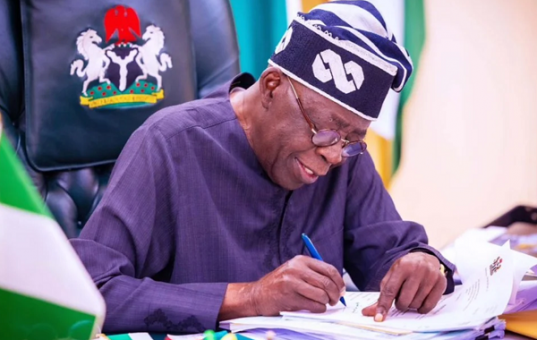
Bola Tinubu’s administration has been making significant strides in reviving Nigeria’s economy, with a focus on transparency, fiscal discipline, and sustainable growth. Since taking office, Tinubu has introduced bold reforms aimed at liberalizing the economy, reducing government interference, and encouraging private-sector growth.
Economic Reforms: A New Era for Nigeria*Tinubu’s economic agenda is built on two main pillars: fuel subsidy removal and foreign exchange unification. These reforms, though painful initially, are starting to yield results. The removal of fuel subsidies is expected to save about $7.5 billion annually, which will be redirected towards infrastructure and social investments. The foreign exchange unification has boosted investor confidence, attracting an estimated $21 billion in capital inflows within ten months.*Positive Impacts on Nigeria’s Economy
GDP Growt: Nigeria’s GDP growth rose to 3.8% in Q4 2024 and accelerated to 4.23% in Q2 2025, driven by oil output and non-oil sector expansion.- *Inflation*: Headline inflation eased to 15.10% in January 2026, down from 27.61% in January 2025.- *Foreign Reserves*: Foreign reserves grew to about $50 billion as of February 5, 2026, driven by higher oil receipts, improved remittances, and foreign exchange reforms.
Debt Service-to-Revenue Ratio*: Improved from nearly 100% to about 50%.- *Trade Surplus*: Nigeria recorded a $10.83 billion trade surplus in the first nine months of 2025, its first in years.-
*Tax Revenue*: Tax revenue surged over 400% since 2023.*Key Policies and Achievements*- *Fuel Subsidy Removal*: Estimated annual savings of about $7.5 billion for infrastructure and social investment.-
*Foreign Exchange Unification*: Boosted investor confidence, attracting $21 billion in capital inflows.- *Executive Order on Oil and Gas Revenues*: Directs all oil and gas revenues to be paid directly into the Federation Account, enhancing transparency and reducing discretionary retention.
